
Blufacade
Facade systems: ACP, structural glazing, aluminium
A facade contractor's whole public face, run by their own team.
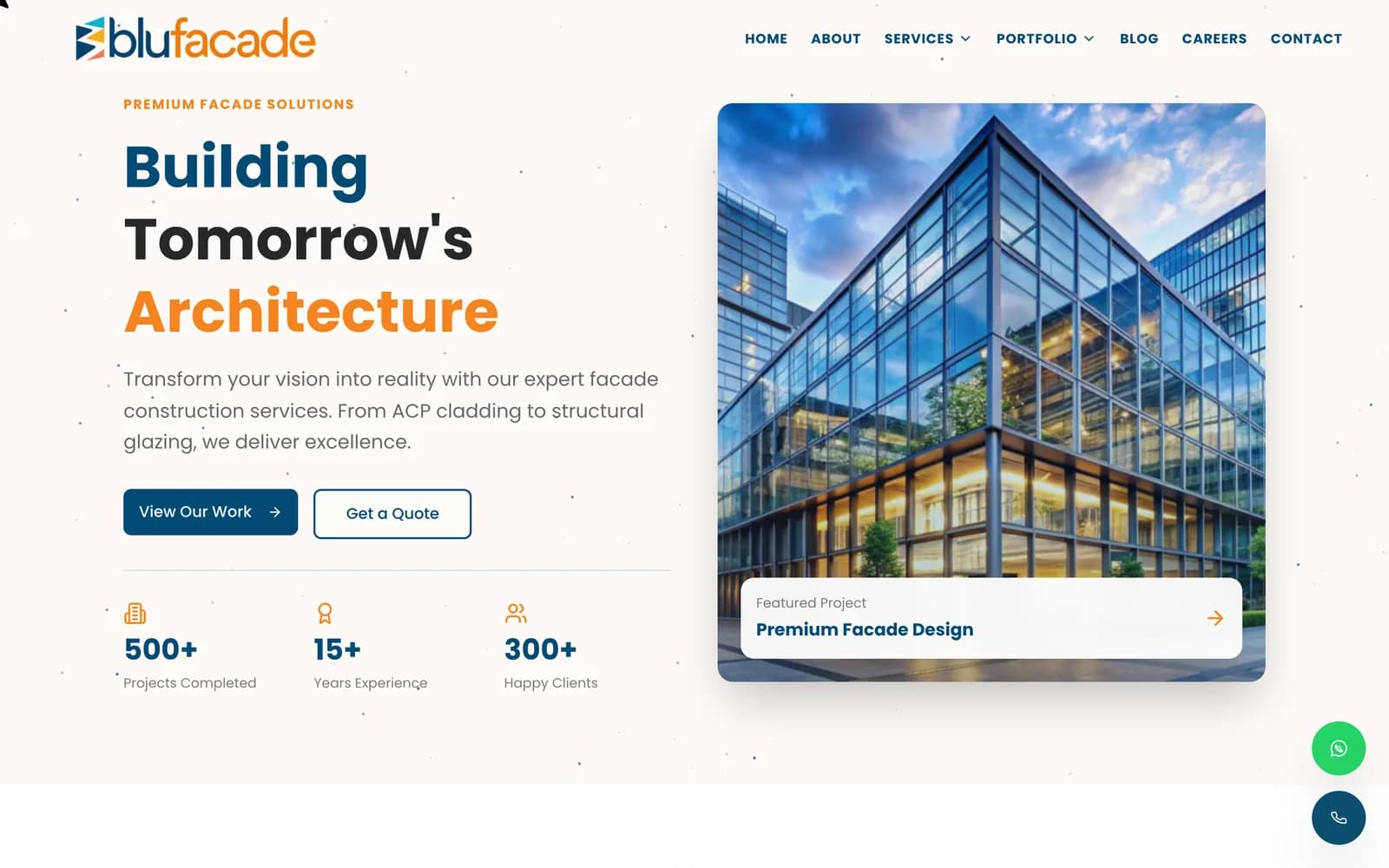
What they would still have been doing by hand.
A facade business wins work on its portfolio, and a portfolio changes every time a project completes.
On a hand-built site that means emailing a developer photographs and waiting.
Careers, testimonials and client logos go stale the same way, and stale is what a prospect notices.
The part the public never sees.
Not a feature list. These are the jobs somebody at the client does in this system, on an ordinary day, without calling us.
Publish a finished project
Photographs, description and category, live the same afternoon the job is signed off.
Post a vacancy
Careers is its own section, so hiring does not wait on a developer.
Work the enquiries
Every lead lands in one place with its source, rather than in somebody's inbox.
Control their own SEO
Titles and descriptions per page, editable by the team that knows the business.
13 working parts, counted from the software itself.
Not a claim about what a site like this usually has. This is the list of sections and routes that exist in this project, which is the difference between a portfolio and an inventory.
Thirteen admin sections. The public site is what a visitor sees; the team spends its time in the other part.
We don't build websites. We build the system your business runs on.
The site your customers see is the front of it. Behind it sits the part your team actually lives in: prices, bookings, orders, enquiries, stock, staff. Changed by you, on the day you decide, not by us on a support ticket.
That is the whole difference. A website tells people you exist. A system runs the business, and it keeps running when you are not looking at it.
What would your team stop doing by hand?
Tell us the job somebody in your business repeats every week: the rate change, the booking register, the enquiry that gets written on paper. A senior consultant will map what running it properly would take.